The Maldives Guide: How to Get There, Costs, Local Islands & Travel Tips
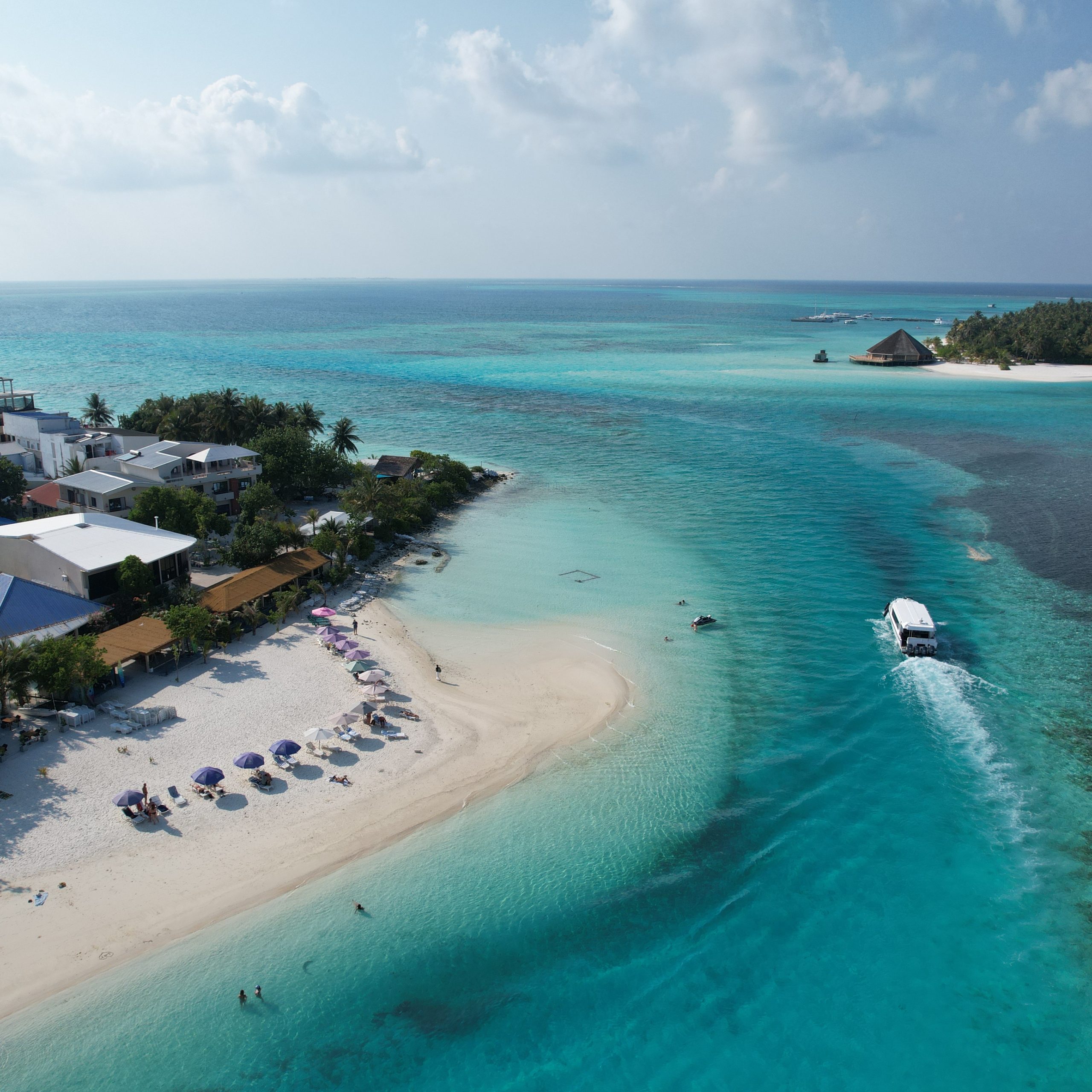
The Maldives is often seen as a luxury-only destination, but you can absolutely experience it in a more affordable and authentic way by combining local islands and guesthouses with a shorter resort stay.
This is the best way to experience both sides of the Maldives, the iconic overwater villas and the real island life.

Public service announcement: You DO NOT have to spend thousands of dollars to experience the Maldives. I repeat, you DO NOT have to spend thousands of dollars to experience the Maldives.
But if you’ve been thinking that the Maldives is not for you because you can afford to spend thousands of dollars for a beach holiday, I’m happy to tell you that you’re wrong, and that the Maldives might actually be well within your budget!
The past 15 years has seen a drastic change in the Maldives tourism offerings, with the opening of local islands to tourists, and a growing number of guesthouses giving guests the chance to experience the stunning islands without having to blow all their savings.
2009 saw changes to local regulations that allowed tourists to stay on local islands amongst Maldivian citizens, and since then almost 400 guesthouses have opened on local islands, expanding the country’s tourist market from honeymooners and high net worth travellers to families, solo travellers, and even backpackers.
How to get to the Maldives
All international flights arrive into Velana International Airport (MLE) near Malé.
From Australia, you’ll typically connect via:
- Singapore
- Kuala Lumpur
- Colombo
From Europe or the US, you’ll typically connect via:
- Dubai
- Abu Dhabi
- Qatar
From Malé, you’ll transfer via:
- Speedboat (most common)
- Public ferry (cheapest)
- Domestic flight or seaplane (for resorts)
Visa requirements
- Free 30-day visa on arrival
- Requirements:
- Passport (6+ months validity)
- Confirmed accommodation
- Return flight
- Traveller declaration form
- You must have a registered hotel or guest house booked for your night of arrival as you will need this to give to immigration.
Super easy entry, no pre-visa needed.
How you reach the local islands?
You can reach the local islands from Male on a public ferry, which are very very cheap but take a very long time. There is a faster but more expensive option of shared speedboats.
- Ferry: cheapest, slow, limited schedules
- Speedboat: faster, easier, arranged by hotels or you can book online. Most of the ferries will depart from Male, unless you are moving between islands on the same atoll.
I highly recommend using speedboats unless you’re really budget-focused or the islands you are visiting are very close to Male.
Best time to visit
- Best weather: November – April
- Cheaper + marine life: May – October
- Shoulder season- end of April and October are great times for good weather and better hotel and tour prices
Whales sharks- sightings and ethical considerations
Where to See Whale Sharks Responsibly (Maldives)
- South Ari Atoll (SAMPA): As the primary habitat of resident young male whale sharks, it is the best place for year-round encounters.
- How to Choose Ethical Operators: Look for operators who:
- Limit the number of swimmers in the water at one time.
- Maintain strict non-touching, no-chasing, and safe distance protocols.
- Do not use sonar to track sharks or chase them down.
- Employ, or work with, marine biologists, such as the Maldives Whale Shark Research Programme.
Manta rays (Baa Atoll)
- Best time: June – October
- Best location: Hanifaru Bay

Bikini beaches & local culture

For the first time visitors to a local (and Muslim) island, there are two many rules to follow:
Walking around (and also swimming) without clothes is allowed only in one of the “bikini beaches”The Maldives is a Muslim country, so modest dress is expected on local islands.
No alcohol is allowed. But if you are really missing an happy hour or a cold beer, you can easily find everything on a private Island Resort.
On local islands:
- You must cover shoulders and knees in villages
- Swimwear is only allowed at designated “bikini beaches”
- These are clearly marked areas for tourists
Outside bikini beaches:
- Wear a cover-up, dress, or t-shirt + shorts
- Be respectful when walking through local areas
On resorts:
- No restrictions
- You can wear bikinis freely anywhere
This is a big difference between local islands vs resorts.
💸 Cost of local islands
Guesthouses
- Budget: $50–$80 USD/night in low season, $80–$150 USD/night
- Mid-range: $80–$150 USD/night in low season, $100–$300 USD/night in high season
Food
- Cafés: $5–$10 USD
- Restaurants: $10–$20 USD for a main meal
🏝️ Best local islands to visit
Already relieved by discovering that there are some cheaper options, was now time to find a good one.
But firstly to choose an island among the 26 natural atolls spanned around roughly 300 square kilometers. We visited two local islands, but you must take into account the length of time you have as if the islands are hours on a ferry or speedboat from Male, you may end up spending more time on transfers if you only have a few days. We decided on Dhiffushi and Mathiveri, Dhiffushi as it is close to Male and not as built up as Maafushi. This is the most popular, developed, and accessible local island in the Maldives for budget travelers. But it doesn’t have a great bikini beach and personally, it is has too many high rises and far more touristy than what we wanted to experience.
📍 Dhiffushi (easy + good all-rounder)


- Easy from Malé, the speedboat took 45 minutes and cost $35 USD one way. There are several speed boats a day but you need to reserve in advance. You can do this online via Bookaway , there are several companies offering shared speedboats. There is a public ferry that cost $3 per person, taking approximately 3 hours and 15 minutes. These, managed via Maldives Nomad, run from Villingili Terminal on certain days.
- Great beaches + value stays
- Perfect first island
We stayed in Si Guest House, which was the perfect location right opposite the bikini beach, we had a beautiful view of the sea from our balcony room and the breakfast was very substantial.
For our activities here we, we booked everything through Isla Excursions. I couldn’t recommend them more. They made a custom tour based on what we wanted to do for $90 pp. We went on a half day tour to two snorkelling spots, one known for turtles, dolphin cruise and to a private sand bank. We didn’t see any dolphins in the morning so the guide offered to pick us up for the afternoon dolphin cruise free of charge and we saw so many dolphins breaching. They organise any excursions from Dhiffushi.

We didn’t see any dolphins in the morning so the guide offered to pick us up for the afternoon dolphin cruise free of charge and we saw so many dolphins breaching. They organise any excursions from Dhiffushi.

We spent three nights on Dhiffushi and that was the perfect amount of time to enjoy the bikini beaches, wander around the island, try out a few restaurants and do excursions. The best meal on the island we had was in Aanu Restaurant, a beautifully designed restaurant part of the Stone Hotel.
Another great restaurant and very reasonably priced was Heron Restaurant, it is great for sunset and right on the water.

📍 Mathiveri (quiet + underrated)

- Smaller + peaceful
- Beautiful sandbanks
- Less touristy
- Great Manta Ray diving near by
Mathiveri Island, located in the North Ari Atoll, is a top destination for experiencing authentic Maldivian culture alongside pristine natural beauty at an affordable cost. It is smaller, more peaceful and less tourist island than Dhiffushi. It has one of the best sand banks and a private island you can access by walking along the sand bank. It is renowned for its turquoise lagoons and rich marine life, offering a serene, less crowded alternative to luxury resorts or other local islands closer to Male.
When we visited in April 2026, it was very quiet and tourism over all was down by 80% in the Maldives due to the war in the Middle East. We found Mathieveri so beautiful, but a bit of a ghost town. The bikini beach and sandbank were gorgeous, but less choice for restaurants and guesthouses.
We found a lovely guesthouse, Zora Beach Inn. The owner picked us up for the port and was very helpful in suggesting a dive shop and excursions. We paid $50 a night for a big ensuite double room with breakfast.
Another hotel which is slightly more expensive and has a lovely restaurant attached to it is Water Cloud Mathiveri. We ate here for most meals and the food was delicious. It has a very diverse menu from local food, western and Indian food.
Mathiveri is a great island to see manta rays from as there is a manta cleaning station only a 10 minute boat ride away. It has great diving too. We dived with about 16 mantas at the cleaning station which was one of the best dives I’ve ever done. I have never seen so many manta ray at one time. We also saw black tip reef sharks and eagle rays on that dive. We booked our dives and also our half day excursion through Dive Club Buoyancy. They were so helpful and tailored our half day excursion and also our dive to what we wanted to see. The half day excursion was 4 hours and it brought us to a shipwreck to snorkel and free dive, snorkelling with nurse sharks and a deserted island that once was a resort. It was only us on the tour and on our way to the deserted island we saw two manta ray in the water and jumped in with them which was magical.
Three nights and two full days is enough on Mathiveri I felt. The speedboat to reach here is 2 hours 45 minutes from Male and leaves Male twice per day. The cost is approx $50 per person each way.
📍 Fulidhoo (authentic + slow travel)
We didn’t visit Fulidhoo but from what I have read online and travellers we met, said it was a beautiful island, known for its stunning white sand beaches, clear turquoise waters, and affordable guesthouses. Takes about 1 hour and 10 minutes from Male and it is famous for diving, snorkeling with nurse sharks, and daily stingray feedings at the beach. There is excellent snorkeling, diving, and boat excursions to nearby sandbanks.
Getting there:
- Speedboat: 1.5 hours, costing approximately $50 one way.
- Local Ferry: Takes about 3.5 hours, costing roughly $4.

📍 Dhigurah (marine life + long beach)

- Best for whale sharks
- Stunning long beach
- Slightly more expensive
Another island we didn’t visit but I have heard it is many people’s favourite local island. It is also very popular as it is aprt of the Ari Atoll, one of the best places in the world to see whale sharks, and manta rays. At Dhigurah, the whale shark tours are on the outside of the atoll, while the manta ray tours are inside the lagoon. Dhigurah is home to the Maldives Whale Shark Research Program, where a good majority of whale shark research around the world is being done.
Dhigurah is a large island – its name actually means Long Island. It is known for it’s good long bikini beach and upscale guesthouses.
Getting there
- Local Ferry – which is the cheapest, but the longest one. Although the trip to Dhigurah would cost only a few dollars (about $5 USD), it would take more than 7 hours.
- Speedboat– $60 per person one way and the boat takes 2 hours from Male.
Resorts vs Local Islands

It really depends what kind of a holiday you are after, although the local islands and resorts are all Maldivian islands and can located less than 500 meters from each other, they both offer completely different experiences. The differences are not only in the price, but also in the atmosphere, rules, culture, and how the entire stay goes.
The main differences are cost, accommodation style, alcohol and dinning and culture. The resorts offer an exclusive, romantic and very private experience. There are no rules regarding dress and swimwear can be worn on all the beaches. Alcohol is available as they are private islands and the resorts will often have 3-4 restaurants on site offering buffet and dining à la carte options. The cost is the biggest difference. I couldn’t get over that price difference on food and excursions, which were both easily 3-4 times higher in the resorts.

Meal price example: Local meal: $10–20, Resort meal: $40–100+. The food is so expensive at the resorts and there is no other option but to eat there, there is no shops or restaurants other than the hotels restaurants, on the island. It can often be cheaper to go for an all inclusive package. The resorts tend to be aimed at honeymooners or luxury travelers. If you want to experience the local culture, you won’t get any of this staying at the resorts.
Local Islands offer authenticity & great value on food, accommodation and excursions. I was really surprised just how cheap it was on the local islands. There are no 5* hotels or overwater bungalows however, all our accommodation was great value and clean, big and had ocean views. The water and bikini beachs are the same as those on the resorts but the main differences is a dress codes applies, no bikinis on public beaches, though “bikini beaches” are designated on the local islands.
Alcohol is prohibited. Food is cheaper ($10 USD for a tuna steak) and locally sourced, with many cafes.
The experience is a lot more authentic and community focused, a lot of the guesthouses are family run and they also own excursion businesses too. The dive shop was owned by the guesthouse owner in Mathieveri and his son drove the boat. I felt we were really keeping the money in the community and tourism was having a positive effect on these families.
Accommodation ranges between $50-200 a night on the local islands, compared to $1500 upwards for a overwater bunglow on the resorts.
We stayed in the Radisson Blu Resort for three nights to experience both sides of the Maldives. It is a 5* resort located in the South Ari Atoll. Situated 105 km from Malé, the resort is accessed via a 30-minute seaplane transfer from Velana International Airport (MLE). This is something you need to factor into the cost and consider when looking at resorts. A seaplane adds on about another $1000 return per person (depends on the resort) and time waiting around. If you only have a few days, you might opt for a resort that offers a speedboat transfer instead of a seaplane. At the time we booked, the Radisson Blu were offering 50% off seaplane transfers and also 60% off room prices.

Best resorts (by type)
The amout of resorts in the Maldives can be overwhelming and so hard to chose one. I have complied a list of some of the top resorts by type I found on my research.
💎 Luxury (dream stays)
- Ritz-Carlton Maldives
- Soneva Fushi
- Waldorf Astoria
💰 Best value all-inclusive
- OBLU resorts
- Kandima Maldives
- Siyam World
- Villa Nautica Paradise Island Resort
- Cinnamon Dhonveli Maldives
All-inclusive is often worth it because it avoids expensive add-ons.
🏝️ Best value overwater bungalows
If you want that iconic overwater villa without ultra-luxury pricing:


- Adaaran Prestige Vadoo (close to Malé + good value)
- OBLU XPERIENCE Ailafushi / OBLU Nature Helengeli
- Centara Ras Fushi Resort
- Meeru Maldives (partial overwater options)
- Radisson Blu Maldives
I found these hotels to offer the best balance of price + experience without going into $2k+/night territory.
My biggest tip…
If you are looking to experience both sides of the Maldives and have dreamt of staying in one of the luxury resorts, do a split stay or either just a day trip to a resort which usually includes all your food and drinks for the day. You could split a week into 5 nights on the local islands and 2-3 nights in a resort. We opted for this type of trip to the Maldives and felt it was the perfect mix of both authentic island vibes and also enjoyed a really luxury experience. This gives you the full Maldives experience without overspending.
Hope this was helpful in planning your next trip to the Maldives!
Sari
About The Author

admin
Related Posts
Tanzania Group trip: 26th Jun- 12th Jul 2027. Kilimanjaro, Safari & Zanzibar
IRISH ON THE RUN · GROUP EXPEDITION TanzaniaKilimanjaro, Safari & Zanzibar2027 Seventeen days across…
31 August 2026
72 Hours in County Leitrim: A Slow Adventure Itinerary
I am slightly ashamed to admit this: I have travelled to over 60 countries, and…
25 August 2026